Book of the Month · Issue 1 · September 2026
In honour of Dad
Click here for page 2: Mac’s AI tips ↓
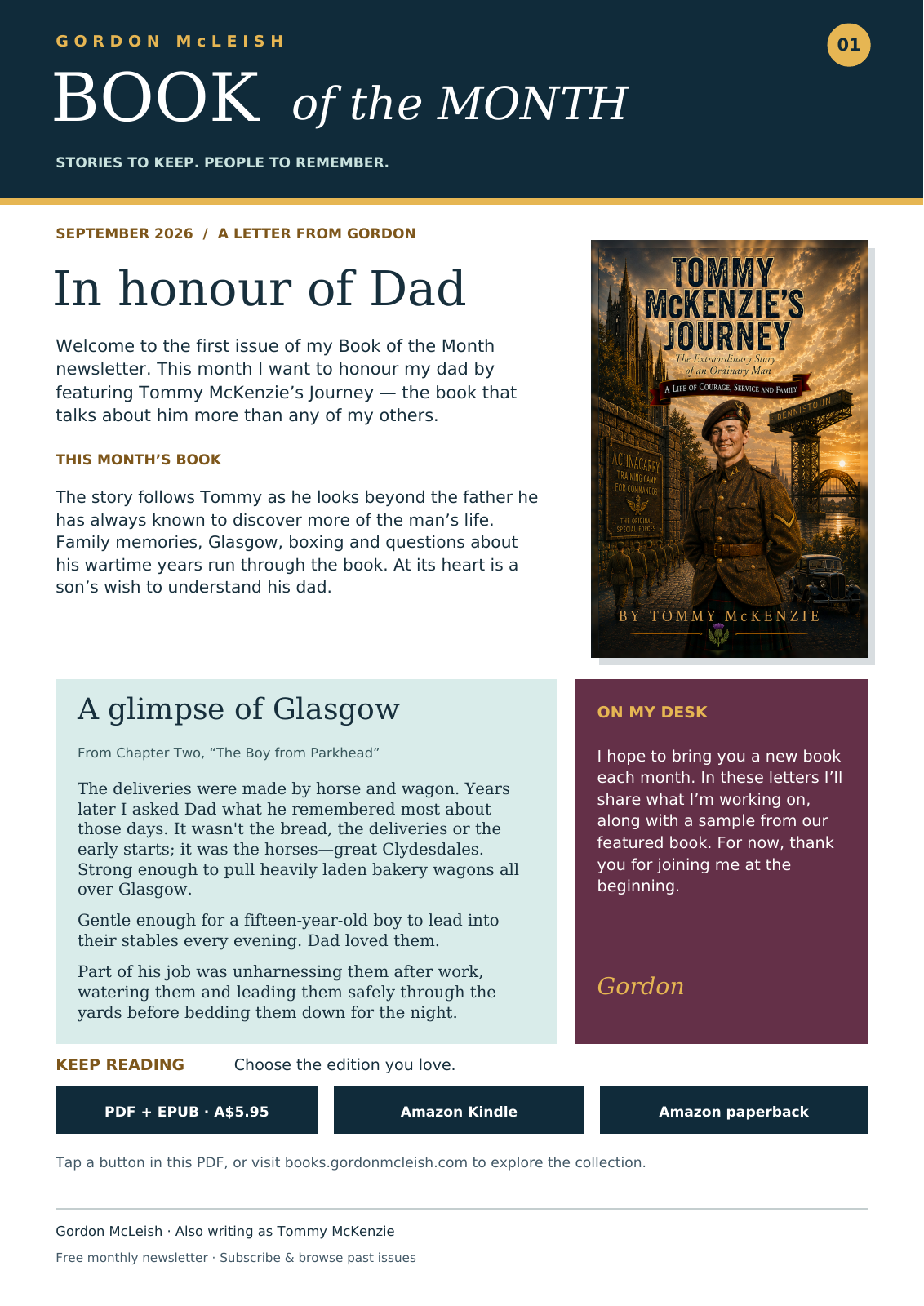

Mac, My AI Mate’s Tips
Your first book: the questions behind the blank page
Read the newsletter as text
Dear readers,
Welcome to the first issue of my Book of the Month newsletter. This month I want to honour my dad by featuring Tommy McKenzie’s Journey — the book that talks about him more than any of my others.
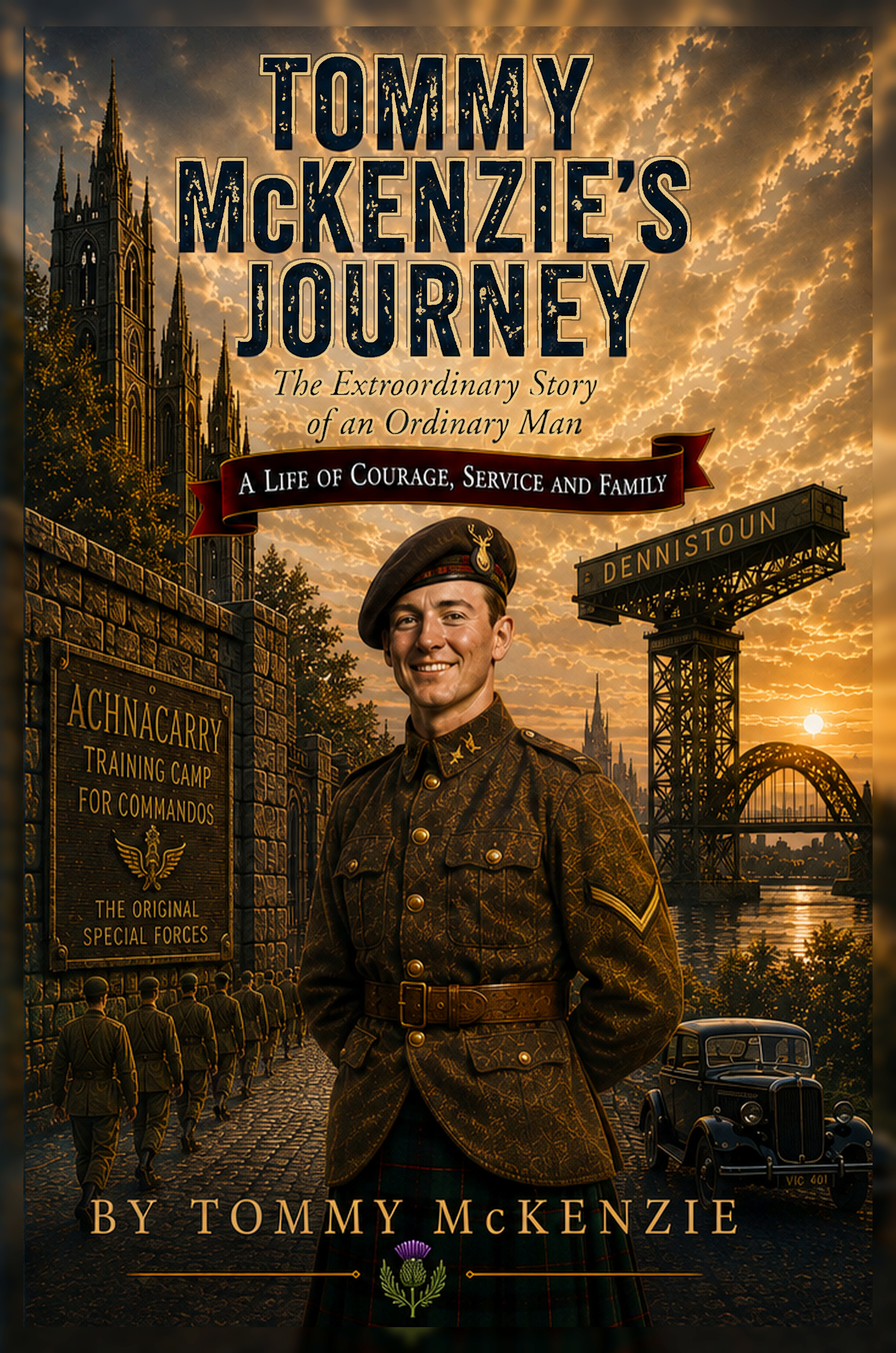
This month’s book
The story follows Tommy as he looks beyond the father he has always known to discover more of the man’s life. Family memories, Glasgow, boxing and questions about his wartime years run through the book. At its heart is a son’s wish to understand his dad.
A glimpse of Glasgow
From Chapter Two, “The Boy from Parkhead”
The deliveries were made by horse and wagon. Years later I asked Dad what he remembered most about those days. It wasn't the bread, the deliveries or the early starts; it was the horses—great Clydesdales. Strong enough to pull heavily laden bakery wagons all over Glasgow.
Gentle enough for a fifteen-year-old boy to lead into their stables every evening. Dad loved them.
Part of his job was unharnessing them after work, watering them and leading them safely through the yards before bedding them down for the night.
Read the rest of the story
Explore the book, or choose the edition you prefer.
More about Tommy McKenzie’s Journey
From my writing desk
I hope to bring you a new book each month. In these letters I’ll share what I’m working on, along with a sample from our featured book. For now, thank you for joining me at the beginning.
Happy reading,
Gordon
Also writing as Tommy McKenzie
Mac, My AI Mate’s Tips
Is my life interesting enough for a book?
You do not need a famous life. Choose a person, a change or a problem you understand well. Ask what a reader might recognise, learn or feel. An honestly observed moment often tells us more than a list of impressive events.
Memoir: selected true-life experiences. An autobiography usually covers a broader span of your life.
Do I really have to start at Chapter One?
No. Start with the scene you can picture: where were you, who was there, and what changed? Write it as a moment rather than a summary. Keep a separate list of other scenes; decide their order once you have something to work with.
First draft: a working version that gives you material to improve. It need not be polished.
Must I plan the whole book first?
Try a one-sentence promise: “This book is about ___, and I want readers to understand ___.” List five to ten moments or ideas that support it. That gives you direction without locking every chapter in place. Rearrange the list as the story develops.
Outline: a rough map, made from bullet points, cards or a list of chapter ideas.
Can AI help without taking over?
Give it a paragraph you wrote and ask for questions or unclear passages. Tell it to preserve your voice and never invent facts or dialogue. Check names, dates and claims yourself. Keep your original so you can reject changes that do not sound like you.
Prompt: instructions for an AI. Include the task, the reader and what must stay unchanged.
Is editing the same as proofreading?
Editing shapes the story’s pace and clarity. Copyediting checks wording, grammar and consistency. Proofreading catches remaining slips when text and layout are nearly settled. Fix a confusing chapter before polishing commas, or you may polish passages you later remove.
Beta reader: an early reader who flags confusion, slow passages and unanswered questions.
I typed “The End”. Is it ready to publish?
Put it aside briefly, then read it aloud. Ask a fresh reader for specific feedback, check your facts and revise. Keep dated backups. Once the words are settled, check the formatted edition too: headings, chapter breaks, contents and any pictures can introduce new problems.
Manuscript: your book’s written text. Formatting turns it into a readable print or ebook edition.
Next month: Kindle, EPUB and paperback. What changes between them, and why does formatting matter?